Learn Tarot
A Complete Guide to Tarot as Symbol, Spirit, Psychology, and Personal Initiation
Tarot is not merely a system of cards. It is a living architecture of the psyche, a mirror for your unconscious, and a language whispered by spirit through symbol, story, and intuition. When you learn tarot, you are not memorising meanings; you are learning to speak the dialect of your own depth — your desires, your wounds, your potential, your shadow, your guides, your fate.
You are learning to listen to what moves beneath the surface of your life.
You are learning to hear yourself clearly.
So many people approach tarot as if it were a puzzle to solve, something linear and static. But tarot is alive. Its images breathe. Its archetypes speak. Its patterns move like tides through your emotional field, through your past lives, through the ancestral memories you carry without realising.
Tarot is one of the oldest spiritual mirrors in existence, born from a confluence of pagan symbolism, esoteric philosophy, occult structure, and psychological truth. It survived because it works — not as fortune-telling, but as revelation. When you sit with the cards, you sit with yourself. You sit with the truth you’ve been avoiding. You sit with the possibility you’ve been afraid to claim. You sit with your soul.
And here, in this guide, you will learn to read tarot with depth: not as a surface-level hobby, but as a practice of intelligence, intuition, and spiritual awakening.
This is tarot as art. Tarot as initiation. Tarot as memory.
This is where your journey begins.
Why We Read Tarot – The Deeper Purpose
People come to tarot because something in them is reaching – for clarity, for meaning, for validation, for direction, for connection. But beneath every surface-level question lies a deeper, more primal longing: to know oneself.
Tarot gives shape to what you are feeling before you can articulate it. It gives voice to what your psyche already knows. The cards reveal your internal landscape with an honesty that is sometimes gentle, sometimes devastating, but always liberating.
Tarot is not about predicting the future; it is about recognising the pattern that is already unfolding. It shows you the choices you’re making unconsciously. It helps you see the archetype you’re currently embodying — not as destiny, but as a threshold.
The Fool may appear when you are stepping into a new life chapter, guided by spirit toward something unknown yet necessary. The High Priestess emerges when your intuition is louder than your logic, when the veil between your conscious mind and the deeper world is thin. The Tower rises when the structures you’ve built upon fear are ready to collapse, so that something truer can be born.
Tarot shows you the truth of your inner state with symbolic precision. And in learning tarot, you are learning how to read energy, psychology, memory, shadow, desire, and the unseen forces that move through human life. You are learning how to interpret not just cards – but the emotional and spiritual intelligence that exists inside every human being.
This is why tarot matters. It doesn’t teach you to escape your life; it teaches you to inhabit it more consciously.
How Tarot Works – Psychology, Occult Structure, and Spirit
Tarot functions on several layers simultaneously, and the deeper you go, the more interwoven they become. On a psychological level, tarot activates the unconscious – the part of you that speaks through symbol rather than language. Your mind recognises patterns in the imagery, and these patterns trigger insights, memories, intuitive responses, and emotional truths that rise into awareness.
On an occult level, tarot is ordered through systems of elemental alchemy (fire, water, air, earth), planetary influence, numerology, and ancient archetypes. The cards are not random illustrations; they carry centuries of esoteric lineage. The Magician channels Mercury’s quicksilver intellect; The High Priestess breathes lunar secrecy; The Emperor stabilises through Aries’ fire and structure. When you learn these layers, you learn to read the cards like a coded map of spiritual principles.
On a pagan level, tarot reconnects you to the cycles of nature, to ritual, to the seasons of your inner world. The suits mirror the body of the Earth: Wands are fire, Cups are water, Swords are air, Pentacles are earth. These elements correspond to states of being – passion, emotion, thought, material reality. When you read tarot, you are reading the natural world moving through the human psyche.
On a spiritual level, tarot is a tool of communication. Spirit speaks in symbol. Guides speak in metaphor. Ancestors speak in image and pattern. Tarot translates the subtle realm into a form your conscious mind can understand. When you learn tarot, your intuition strengthens because you are giving it a medium through which to speak clearly.
Tarot is the meeting point between mind and mystery – where psychology meets soul, where symbol meets spirit, where reason meets deep knowing. To learn tarot is to learn the language of this intersection.
The Structure of the Tarot – The Map of the Fool’s Journey
Tarot is not a random assortment of pictures. It is a structured story – a spiritual anatomy of human life. The deck is divided into two realms: the Major Arcana and the Minor Arcana. Understanding these two is key to becoming a deep reader.
The Major Arcana – twenty-two cards from The Fool to The World – trace the arc of initiation. They represent major thresholds, spiritual lessons, karmic chapters, psychological transformations. When a Major appears in a reading, it signals that the moment is significant. A turning point. A doorway.
The Minor Arcana – the everyday energies divided into four suits – show the details of daily life. They reveal emotional patterns, decisions, tensions, relationships, behaviours, and the subtle forces shaping your current experience.
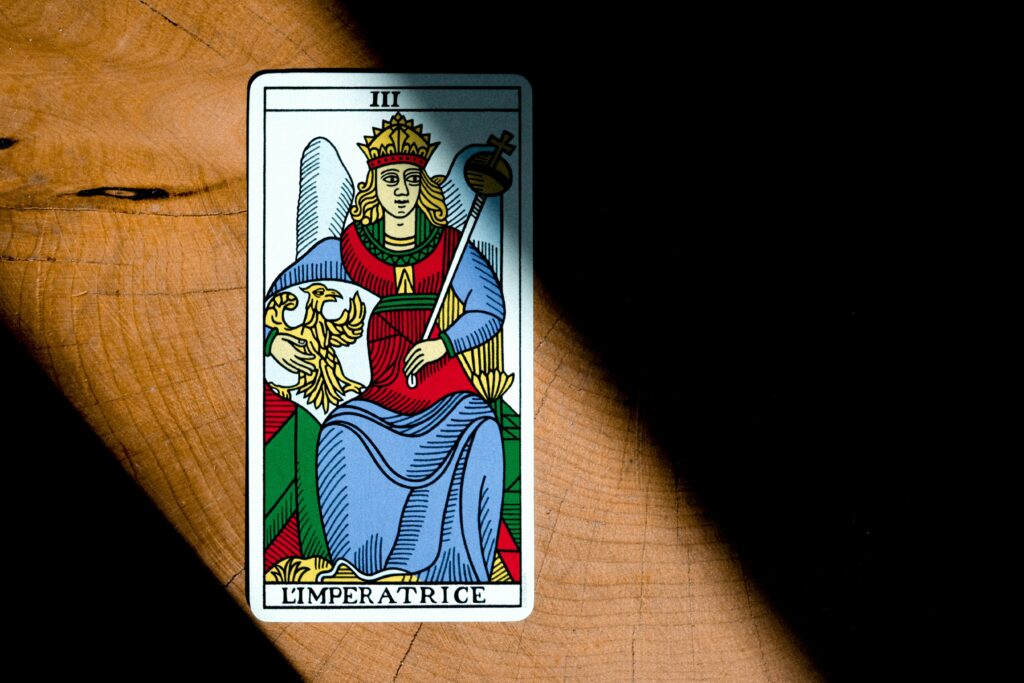
Over time, you will begin to see that the tarot deck is not just a collection of meanings – it is a map of consciousness. The Fool represents the beginning of a soul’s awakening; The Magician the claiming of personal power; The High Priestess the opening of intuition; The Empress the embodiment of creativity; The Emperor the structure of identity; The Hierophant the weight of tradition.
Every card is a reflection of an archetype within you – a psychological character, a spiritual lesson, a shadow, a teacher, a threshold. Learning tarot means learning to recognise which archetype is active within your life at any given moment.
In this part of the guide, we begin to explore how these archetypes operate within you, how they speak, how they echo through your personal history, and how they appear in readings when your soul is ready to confront or integrate a particular truth.
The Major Arcana – The Story of Your Becoming
The Major Arcana is a spiritual biography told in symbols. It doesn’t just describe events – it describes states of being. It charts the evolution of consciousness, from innocence to mastery, from fragmentation to integration, from illusion to clarity.
Tarot readers often say that the Majors represent the “big energies” or “major lessons” in a reading, and while that is true, it is also incomplete. The Major Arcana is the narrative of your soul’s awakening. Each card is a chapter of your internal story.
The Fool is the spark of incarnational innocence – the soul stepping into the unknown with trust and destiny guiding its feet. The Magician is the point at which you discover agency, will, the capacity to shape reality. The High Priestess is the moment you first recognise your intuition as a legitimate source of truth, the whisper of spirit behind your thoughts. The Empress teaches you how to inhabit your body, your sensuality, your creativity. The Emperor teaches you structure, boundaries, responsibility.
As you continue your study, you will find that these archetypes are not abstract concepts – they are alive within you. You have walked every step of the Fool’s journey in your own life, repeatedly. And you will walk it again.
Learning the Major Arcana means learning your own psyche.
It means learning the language of your own evolution. It means learning how spirit shapes you.
The Minor Arcana – The Four Elemental Realms
The Minor Arcana is where tarot becomes intimately human. While the Majors chart the story of your soul’s unfolding, the Minors show how those lessons play out in the fabric of everyday life – your relationships, your emotions, your fears, your decisions, your habits, your ambitions. The four suits mirror the four elements, the four psychological functions, the four pathways through which energy moves:
Wands carry fire — passion, creativity, direction, impulse, spiritual ignition.
Cups carry water — emotion, intuition, longing, memory, relationship.
Swords carry air — thought, clarity, conflict, truth-seeking, mental pattern.
Pentacles carry earth — stability, money, home, body, career, material life.
When you learn tarot, you learn to read these elemental dynamics like weather patterns. You begin to understand why a certain period of your life feels volatile (Wands), or emotional (Cups), or mentally exhausting (Swords), or grounded and practical (Pentacles).
The Minors teach you how to interpret the subtleties of human experience – the micro-movements, the shifts, the unspoken tensions. They let you see the details the Majors don’t show, giving you a full picture of the psyche in motion.
When the Cards Begin to Speak Back
At a certain point in your tarot journey, something changes. You stop pulling cards the way a beginner does – searching for confirmation, hunting for certainty, hoping for a fixed answer – and you begin reading the space between the cards. You start noticing the way a spread breathes, the emotional atmosphere it creates, the psychic pressure that rises in your body when truth approaches.
This is the stage at which the tarot begins reading you.
Interpreting Upright & Reversed Cards Without Fear
One of the most liberating skills in tarot is the ability to read upright and reversed cards with nuance. Too many people rush to Google when they see a reversed card, as if it were a bad omen – or worse, a punishment. But a reversed card is simply a shift in direction, a reorientation of energy, a subtle change in the psychic weather.
When you read reversals fluently, tarot becomes far more multi-dimensional. An upright card tends to reveal the manifest, conscious level of a situation; a reversed card often reveals the unconscious, the hidden, the internal struggle, or the spiritual lesson beneath the surface. Neither is good or bad. Both are invitations.
For example, The High Priestess upright is intuition flowing clearly; reversed, she becomes intuition challenged by doubt, external noise, or fear of seeing the truth. The energy is the same – mystery, depth, inner knowing – but one expression invites expansion, and the other invites listening.
This is why tarot is not fortune-telling. It is emotional literacy. Psychological insight. Spiritual dialogue. And as you become more comfortable letting the reversed cards speak from their shadows, readings become not just clearer – but braver.
Reading Court Cards as People, Selves, and Spirits
Many beginners struggle with the court cards not because they are complex, but because they are alive. Pages, Knights, Queens, and Kings each represent a level of development, a behavioural pattern, a psychological state – but also, depending on the reading, a real person, a hidden aspect of the querent, or an archetypal spirit or ancestral presence.
The courts speak through temperament and texture. A Knight of Swords announces himself with mental intensity, urgency, argument, restlessness; a Queen of Cups arrives with emotional depth, softness, alchemy, psychic permeability.
But beyond that, each court card is also a mirror of the querent’s behaviour in the situation. They show the roles we adopt, the personas we hide behind, the emotional strategies we’ve learned in childhood and carried into adulthood.
In deeper readings – especially in soul readings or shadow sessions – court cards also speak to spiritual guardians, ancestral influences, and the subtle voices that guide or disrupt us. When you read tarot long enough, you begin to recognise the feeling of a presence that is not simply psychological.
This is why learning tarot is learning yourself – and your unseen companions.
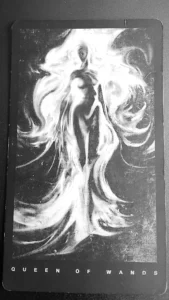
How to Read a Spread as a Story
Once you understand the cards as individual voices, the next step is reading them as a story. A tarot spread is not a series of disconnected meanings; it is a narrative, a progression, a psychological or spiritual arc. Each card influences the next, echoes the previous, contradicts or confirms, challenges or softens.
A three-card spread, for example, is one of the most elegantly simple ways to learn narrative structure. Past–Present–Future. Mind–Body–Spirit. Situation–Block–Advice. These are not fixed positions—they are invitations to see the movement of energy.
What matters most is the relationship between the cards. If the past is marked by the Five of Swords – a conflict, a lie, a sense of betrayal – and the present is the Four of Cups, you can feel the emotional withdrawal, the disappointment, the refusal to engage. Then, if the future card is The Star, you instantly understand the healing arc: from conflict, to emotional closure, to hope returning.
What gives a reading depth is not the individual meanings – it is the tension between them.
The same is true for complex spreads. The Celtic Cross, for instance, is not a dense wall of information—it is a psychological map that reveals resistance, desire, fear, shadow, strength, and soul trajectory all at once. Each card is a doorway, but the spread is the cathedral.
Symbolism: The Tarot’s Hidden Language
Every tarot card is a miniature grimoire. Symbols do not decorate the cards—they speak through them. They bypass logical reasoning and go straight into the unconscious, where the deepest truths hide.
The colour of a cloak, the direction a figure faces, the animal in the corner, the number of stars, the shape of a gesture – everything is deliberate, generative, alive. Tarot is a symbolic language because your psyche is a symbolic organism. You dream in symbols. You feel in metaphor. You heal in imagery. You awaken through meaning.
When a student learns to read the symbols rather than memorise definitions, tarot becomes an oracle rather than a textbook.
For example:
- A river always indicates emotional flow, memory, or healing.
- Mountains always represent challenges, spiritual ascent, or psychological growth.
- A lion is never just a lion – it is instinct, power, ego, ancestral fire.
- The moon invites intuition, illusion, spiritual initiation, dream states.
- A doorway always marks a threshold: a change, a passage, a rite of becoming.
As you begin recognising symbolic patterns, readings become instinctive. You no longer search for the meaning – you see it.
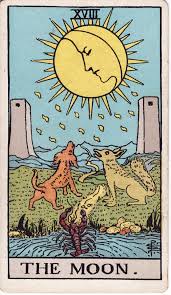
Tarot as a Mirror of the Psyche
Tarot is one of the oldest psychological tools humanity has ever created, even before psychology existed as a field. The archetypes in the cards map directly to Jungian structures: the shadow, the anima and animus, the Self, the ego, the collective unconscious.
But tarot goes deeper than analysis – it reveals emotional truth. When you lay a spread, you’re not predicting fate; you’re witnessing the psyche speak in its purest form.
The Tower shows the crash of an outdated defence mechanism. The Devil exposes addiction, avoidance, or emotional bondage. Temperance reveals long-sought equilibrium. Strength shows the integration of instinct with compassion.
You’re not simply learning card meanings—you are learning human nature. And as you learn to recognise psychological patterns in the cards, you begin recognising them in yourself and the people around you.
This is where tarot becomes a healing tool. A mirror. A compass.
Spirit, Guides, and the Subtle World
There is a subtle dimension to this work – a presence that sits just beyond rational perception. Some call them guides. Some call them ancestors. Some feel them as archetypal presences. Others sense emotion more than entity.
You do not need to force belief; the cards speak whether or not you name the speaker. But as you learn tarot, you may begin noticing synchronicities, dreams, intuitive flashes, sensations of being guided to a message or pulled toward a truth you didn’t consciously know.
This is not fantasy – it is the language the soul uses when the mind is busy explaining everything away. Tarot is the meeting point between your conscious thought and the subtle flow of something wiser.
When Tarot Becomes Embodied Knowing, Not Memorisation
There comes a moment in your tarot journey when the cards stop being separate things—discrete symbols, meanings, definitions—and begin to interweave into a living field of awareness. It becomes less like learning and more like remembering. Less like study and more like recognition.
This is the stage where the cards speak without words. And you, finally, can hear them.
This final movement of the journey is about becoming a reader, not just a student – someone who can feel the energetic logic of a spread, who can recognise the emotional mathematics in front of them, who can hold the querent with accuracy, clarity, compassion, and truth.
It’s the stage where your intuition sharpens, where the archetypes take on shape and memory, where your own unconscious finally reveals its native fluency in symbolic language.
If you’ve reached this point, you’re ready. You’re stepping into the deeper world.
Becoming a Tarot Reader
Becoming a tarot reader is not a certification or a title. It is an initiation that happens slowly, internally. One day you wake up and realise you don’t “pull” cards anymore – you meet them. You enter the spread the way you’d enter a room. You can feel the emotional gravity of each card, the relationship between them, the subtle conversation happening on the table.
And what’s beautiful is that this stage doesn’t come from force or memorisation. It comes from quiet. From the space between you and the cards, widening like a threshold.
If you continue reading long enough, you’ll discover that your sensitivity shifts. You don’t just interpret the cards—you channel them. The archetypes feel alive. The symbols breathe. There is a sense that something moves with you as you read. Call it intuition, spirit, guides, ancestors, or the soul itself speaking through images – whatever your philosophy, the effect is the same: you’re no longer reading alone.
Tarot becomes a dialogue between worlds.
The Art of Holding Space for Others
Reading tarot for another person is an act of devotion. You’re holding their story, their fear, their confusion, their hopes. You’re holding the fragile membrane between what they say and what they truly mean. And you’re doing it with exquisite care.
The energy of another person influences the deck. Their presence shifts the logic of the spread. Their emotional landscape tugs the cards into narrative shape. This is why no two questions ever feel the same, even if the words are similar – the soul underneath is different, and the cards speak to that.
Ethics: The Compass of a Real Reader
It’s tempting to think spiritual ethics are a set of rules, but in reality, they’re an orientation of the heart. Ethics is about how you hold power. Tarot gives you access to a person’s emotional core – so you handle it like something sacred.
Ethical reading means refusing to weaponise the cards, refusing to make deterministic predictions that trap a person in fear, refusing to pathologise, refusing to override someone’s intuition with your own ego. Good readers leave their clients more empowered, more awake, more autonomous, more able to navigate their own future – not dependent on you.
Spreads: Creating Narrative Architecture
By now, you know spreads aren’t formulas -they’re structures for consciousness. A spread is a container that helps the psyche reveal itself in ordered, digestible form.
A three-card spread tells a story with the clarity of a poem. The Celtic Cross tells a story with the complexity of myth. Relationship spreads reveal emotional geometry. Shadow spreads reveal the places we hide. Career spreads uncover long-term patterns in identity and desire.
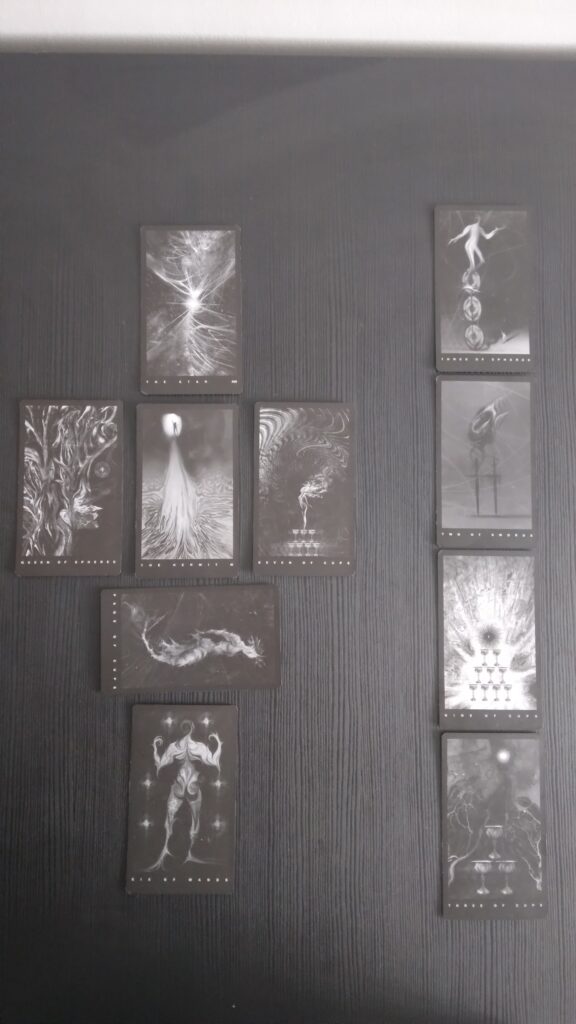
When Cards Speak to Each Other – Card Synthesis
A tarot spread is never a series of isolated meanings. It’s a conversation. The cards argue, support, contradict, reveal, mirror, provoke, clarify, expand, and challenge one another.
This is where advanced readers excel: in noticing the emotional tone, the recurring symbols, the colour echoes, the suit imbalance, the Major Arcana density, the way one card’s posture faces another, the way a reversed card pushes back against an upright one, the subtle spiritual trajectory implied by movement or stillness.
A reader sees relationships between the cards.
A novice sees definitions.
Let yourself move beyond meaning and into motion. That is where tarot becomes alive.
Reading for Yourself vs. Reading for Others
When reading for yourself, your psyche is both the speaker and the listener. This is why self-readings can feel visceral, confronting, or emotionally charged. The cards seem louder. The truths are sharper. The shadow elements shine through more quickly because nothing stands between you and what you need to hear.
Reading for others is more relational, more nuanced, more attuned. There’s a dance between your intuition and the client’s energy. One reveals what the other cannot yet articulate.
Both practices are essential.
Both develop different muscles.
Both make you a more complete reader.
When in doubt, return to the cards like a ritual. You’ll never leave unchanged.
Soul-Level Interpretation – When Tarot Meets Spirit
This is where tarot transcends the psychological and enters the spiritual. Not in a performative or theatrical way, but through a quiet shift in consciousness. When you read long enough, you begin to sense a presence behind the cards—guides, ancestors, archetypal forces, the higher self.
Some readings come through so clearly it feels like listening. Some feel like vision. Some feel like memory. Some feel like you’re translating a language you once knew fluently in another life.
You don’t force this. You open to it It comes when it is meant to.
Shadow Work & Tarot – A Necessary Integration
Shadow work is the undercurrent of tarot, whether you name it or not. Every card contains light and darkness; every reading reveals what we want and what we fear, what we say and what we hide.
Tarot helps you trace the edges of your shadow with tenderness instead of shame. It lets you understand your emotional defences, your unconscious patterns, the archetypes you’ve rejected or disowned.
This is why tarot is profoundly healing: it reveals the truth without brutality and without flattery. It shows the wound without re-wounding.
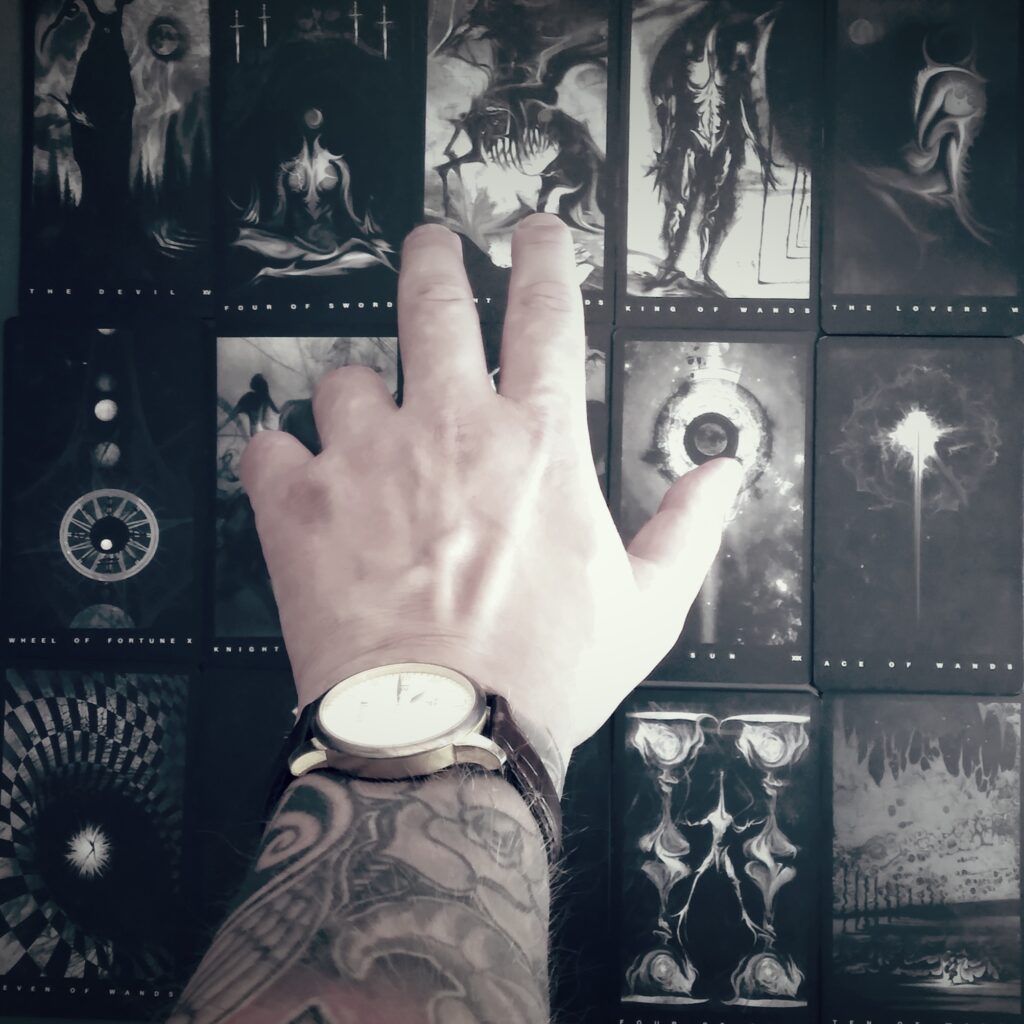
The Path to Tarot Mastery
Mastery isn’t about memorising 78 meanings. It is about reading the hidden patterns beneath the surface of life.
You become a master reader when you:
- listen more deeply than others
- slow down enough to feel the truth
- recognise emotional patterns immediately
- trust your first intuitive impression
- use the cards as portals, not props
- respect the querent’s autonomy
- let the archetypes move through you without resistance
- allow your spirit guides to work with you
- remain a student even after years of reading
Tarot mastery is humility married with power. It’s the kind of mastery that doesn’t announce itself – it emanates.
People feel it in your presence, your clarity, your calm, your accuracy, your honesty. This is the path you’re walking.
You’re closer than you think.
Follow the Path Deeper
And if you want to go deeper than pages and guides can take you:
You can work with me privately.
Through tarot mentorship, psychic development, intuitive education, or channelled soul readings – I guide you through the layers of your own awakening.
This is the path. And you’re already walking it.
“To learn the deeper somatic, body-led approach to intuitive reading, explore my full guide: How to Read Tarot Intuitively (The Somatic Method).”