Tarot Card Meanings – The Tarot As A Living Language Of Symbols & Truth
Tarot is not a system of memorisation. It is a living symbolic organism – psychological, occult, esoteric, mythic, ancestral, and spiritual.
Every card is a doorway into:
- your unconscious mind,
- your untold stories,
- your shadow and your light,
- your patterns and possibilities,
- your soul’s memory,
- and the spirits, archetypes, and subtle forces that accompany your path.
To understand tarot is not only to study it – it is to enter into relationship with its symbols.
This page is your complete map of the 78 cards: Major Arcana, Minor Arcana, suits, numbers, courts, symbols, elements, reversals, and intuitive interpretation.
You will find:
- deep card meanings
- psychological interpretations
- shadow-work readings
- occult correspondences
- pagan mythic references
- spirit-realm nuances
This is the tarot as most readers never learn it – intuitive, embodied, psychologically rich, energetically aware, and spiritually attuned.
What You’ll Find On This Page
This Tarot Card Meanings guide includes:
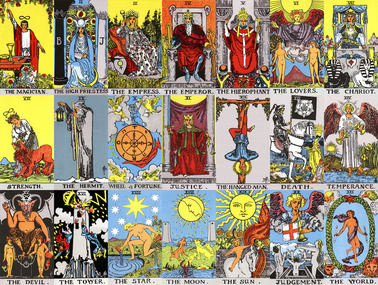
A complete overview of the Major Arcana (22 cards)
Each one linked to its full guide.
Detailed foundations of the Minor Arcana (56 cards)
Cups, Wands, Swords, Pentacles. Ace–10 + Court Cards (Page, Knight, Queen, King).
How suits, numbers, and elements shape meaning
Psychology, occult symbolism, and intuitive layers.
How to read reversals
Shadow, blocked energy, karmic patterns.
Quick-reference tables for:
- Love
- Career
- Spirituality
- Shadow & Integration
- Upright vs reversed contrasts
The Major Arcana – The 22 Gates Of Initiation
The Major Arcana is the spine of the tarot – the mythic journey of the soul. It is the Fool’s Journey: the psychological, spiritual, and archetypal evolution every human undergoes, repeating in cycles throughout a lifetime.
Every card here represents:
- an initiation,
- a threshold,
- a lesson,
- a karmic pattern,
- or a season of the soul.
Below, you’ll find the psychological, esoteric, and intuitive essence of each card — plus internal links to the full-length articles as you create them.
0 – The Fool
Themes: New beginnings, divine innocence, destiny, risk, trust, spirit-guided leaps.
Psychology: Openness, naive optimism, individuation.
Occult: Air element, Uranus, the eternal youth archetype.
Spiritual: Past-life resets, soul-contract openings.
I – The Magician
Themes: Manifestation, agency, skill, willpower.
Psychology: Conscious creation, ego strength, identity.
Occult: Mercury, ceremonial magic, the four tools of alchemy.
Spiritual: Energy work, channeling, focus, ritual power.
II – The High Priestess
Themes: Intuition, hidden knowledge, mystery, psychic perception.
Psychology: The unconscious, inner knowing, boundary between worlds.
Occult: Lunar magic, the Veil, sacred feminine mystery traditions.
Spiritual: Spirit guides, inner temple, ancestral intuition.
III – The Empress
Themes: Fertility, creativity, embodiment, abundance.
Psychology: Safety, self-worth, nurturing.
Occult: Venus, earth magic, sacred sensuality.
Spiritual: Creative destiny, mother archetype, divine feminine.
IV – The Emperor
Themes: Structure, authority, discipline, self-mastery.
Psychology: Boundaries, father archetype, executive function.
Occult: Aries, solar fire, the warrior-king.
Spiritual: Life mission, karmic responsibility.
V – The Hierophant
Themes: Tradition, lineage, initiation, spiritual authority.
Psychology: Integration of values and identity.
Occult: Taurus, temples, priesthoods.
Spiritual: Elders, past lives, ancestral teachers.
VI – The Lovers
Themes: Union, harmony, choice, alignment.
Psychology: Attachment, vulnerability, intimacy.
Occult: Gemini, sacred duality, eros.
Spiritual: Soulmates, twin flames, karmic contracts.
VII – The Chariot
Themes: Ambition, drive, direction.
Psychology: Willpower, autonomy, self-leadership.
Occult: Cancer, celestial guardianship.
Spiritual: Momentum, spiritual protection.
VIII – Strength
Themes: Compassion, gentleness, inner power.
Psychology: Emotional regulation, resilience.
Occult: Leo, the lion, taming instinct.
Spiritual: Healing, spirit allies, power-with rather than power-over.
IX – The Hermit
Themes: Withdrawal, seeking, enlightenment.
Psychology: Self-reflection, introspection.
Occult: Virgo, lantern of wisdom, solitary paths.
Spiritual: Guides, guardians, soul-wisdom.
X – Wheel of Fortune
Themes: Fate, cycles, luck, destiny.
Psychology: Adaptability, emotional fluidity.
Occult: Jupiter, the four living creatures, cosmic laws.
Spiritual: Karmic cycles, soul timing.
XI – Justice
Themes: Truth, accountability, cause & effect, karmic correction.
Psychology: Cognitive clarity, fairness, integrity, decision-making.
Occult: Libra, the scales, cosmic law, ceremonial judgment.
Spiritual: Karmic contracts, soul balance, ancestral truth-telling.
XII – The Hanged Man
Themes: Surrender, liminality, sacred pause, reversal.
Psychology: Cognitive reframing, letting go of ego control, patience.
Occult: Water element, initiation suspension rites, Odin archetype.
Spiritual: Surrender to spirit, rewiring destiny, receiving divine downloads.
XIII – Death
Themes: Transformation, endings, rebirth, metamorphosis.
Psychology: Shadow integration, grief processing, identity shedding.
Occult: Scorpio, alchemy, underworld initiation, phoenix fire.
Spiritual: Past-life death cycles, soul renewal, ego dissolution.
XIV – Temperance
Themes: Harmony, purification, inner alchemy, integration.
Psychology: Emotional balance, nervous-system regulation, synthesis.
Occult: Sagittarius, angelic guidance, spiritual transmutation.
Spiritual: Healing, subtle energy calibration, divine timing.
XV – The Devil
Themes: Desire, shadow, addiction, bondage, temptation.
Psychology: Compulsion, trauma loops, unconscious patterns.
Occult: Capricorn, shadow magic, primal instinct.
Spiritual: Soul contracts of liberation, confronting demons, awakening through shadow work.
XVI – The Tower
Themes: Sudden change, revelation, upheaval, truth breaking through.
Psychology: Disruption of false identity, ego shattering, awakening shock.
Occult: Mars, lightning initiations, divine intervention.
Spiritual: Timeline collapse, karmic clearing, liberation through destruction.
XVII – The Star
Themes: Hope, guidance, renewal, spiritual clarity.
Psychology: Reconnection, optimism, meaning-making.
Occult: Aquarius, holy water, celestial blessings.
Spiritual: Star lineage, spiritual destiny, soul-washing.
XVIII – The Moon
Themes: Dreams, intuition, illusion, subconscious tides.
Psychology: Projection, fear, imagination, emotional depth.
Occult: Pisces, lunar mysteries, astral journeys, dream magic.
Spiritual: Psychic initiation, shadow realms, ancestral whispers.
XIX – The Sun
Themes: Joy, vitality, clarity, expansion.
Psychology: Confidence, secure attachment, positive identity.
Occult: Solar magic, divine child archetype.
Spiritual: Soul radiance, purpose illumination, spiritual breakthrough.
XX – Judgement
Themes: Awakening, reckoning, rebirth, calling.
Psychology: Integration, breakthrough insight, life review.
Occult: Pluto, resurrection, trumpet of truth.
Spiritual: Soul mission activation, karmic absolution, higher-self alignment.
XXI – The World
Themes: Completion, mastery, integration, cosmic unity.
Psychology: Closure, achievement, identity wholeness.
Occult: Saturn, four guardians, sacred completion.
Spiritual: Soul graduation, destiny fulfillment, ascension portal.
In
Filename: tarot-reader-preparing-sacred-space.jpg
Alt text: “A tarot reader preparing a quiet sacred space before a reading.”
Description: A candle-lit table with cards resting in stillness, symbolizing internal preparation.
How Tarot Speaks – Symbols, Spirits, and the Logic Beneath the Mystery
Tarot speaks in layers. Some readers hear the cards like a whisper from spirit guides. Others feel the meanings rise up like a psychological recognition. Some notice ancestral symbols weaving themselves into the spread. Some feel the cards communicate through a subtle shift in the room’s atmosphere.
There is no single “correct” method – there is only your method. But all methods share one truth:
Tarot speaks through metaphor, pattern, and the language of the unconscious.
This is why a card can:
- Feel like a message from a guide
- Mirror a memory you forgot you carried
- Strike you as a sudden emotional truth
- Echo a theme repeating in your client’s life
- Reveal something your rational mind tried to avoid
- Call a shadow into the open
- Confirm the intuition you didn’t admit you already knew
Tarot is not random. It is pattern-based communication with the unseen – whether psychological, archetypal, or spiritual.
When you read tarot, you are listening to:
- the symbolic mind
- the mythic self
- the ancestral field
- the spiritual current
- the emotional body
- the shadow
- the unconscious
- the client’s hidden longing
- the soul’s quiet direction
A true reading is never just intellectual – it is relational. It is an intimacy between you, the cards, and the spiritual or psychological forces that rise to speak.
Asking the Right Question – The Doorway of Every Reading
A tarot reading is only as clear as the question that anchors it. This is why question-craft is one of the most important skills a reader can develop.
The wrong question creates fog. The right question opens a door. Here’s the secret:
Tarot loves questions that explore truth, not prediction.
Instead of:
“Will he come back?”
Try:
✔ “What is the truth of this connection?”
✔ “What is his emotional position?”
✔ “What direction is this relationship moving?”
✔ “What is the soul contract between us?”
This shifts the energy from passive hope to active clarity.
Psychology plays a role here. Many questions arise from fear, attachment, or uncertainty. Tarot redirects them toward insight – toward the deeper truth someone is afraid to ask.
Spirit plays a role as well. Guides and ancestors tend to respond more clearly when the question aligns with purpose, growth, shadow-integration, or soul-alignment. So when crafting questions, ask yourself:
- What truth does the client actually need?
- What is the soul trying to learn here?
- What wound is the question hiding?
- What spirit or inner voice is trying to speak?
Good questions pull meaning out of the dark.
Choosing a Spread – The Architecture of the Reading
Spreads are not random shapes. They are containers for energy, pattern, and revelation. When you choose a spread, you are choosing a structure — a way the story will be told.
For example:
3-Card Spread:
Perfect for beginners, quick clarity, emotional check-ins, and spiritual direction.
Celtic Cross:
Ideal for complex psychological or spiritual questions, relationship karmas, and shadow-pattern mapping.
Relationship Spread:
Reveals the contract between two souls — the truth behind the bond.
Shadow Work Spread:
For deep healing, ancestral themes, trauma patterns, and unconscious blocks.
Choosing a spread is choosing a doorway into someone’s inner world – and the spirits or archetypes who guard it.
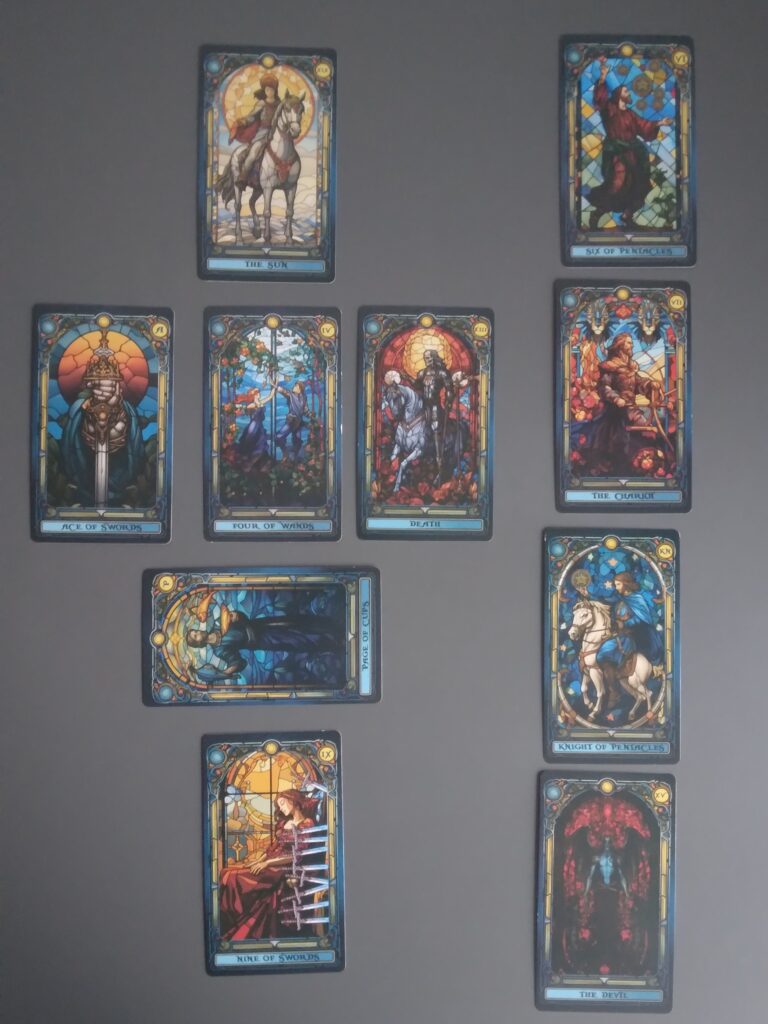
The Shuffle – Whether Spirits or Psychology Guide Your Hands
Shuffling is one of the most psychologically revealing moments of the reading. It is not about randomness – it is about attunement.
Some readers feel the presence of guides shifting the deck. Others feel their unconscious mind getting heavier, warmer, or more focused. Others shuffle until the cards feel “alive.”
What matters isn’t the method – it is the moment of alignment. Shuffling is where you:
- release judgement
- connect with your intuitive field
- invite spirit or archetypal forces to influence the draw
- steady your breathing
- let the question descend
- become receptive
Many pagan traditions see the shuffle as a micro-ritual – a moment where the reader crosses from the mundane into the spiritual. Occultists often see it as a method for aligning the microcosm (you) with the macrocosm (the universal field). Psychologists compare it to grounding or centering, where the thinking mind yields to the intuitive mind.
However you understand it – the shuffle is sacred.
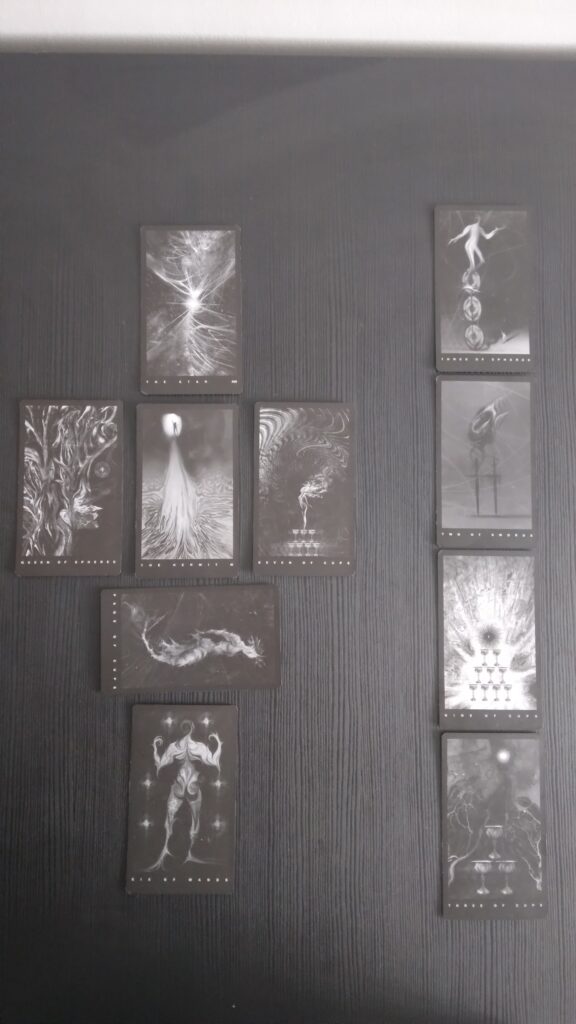
The Occult Layer of Interpretation
Beneath the psychological layer lies the occult layer – the hidden, esoteric structure that underpins the entire tarot system. This includes:
- planetary correspondences
- elemental harmonics
- Kabbalistic paths
- Hermetic numerology
- the symbolic lineage of pagan mystery traditions
You do not need to know these to read tarot well, but learning them deepens your readings immensely. If The High Priestess (moon, subconscious, the veil) sits beside The Sun (illumination, clarity), the occult message is simple: Something hidden is becoming visible.
If The Empress appears beside The Tower, the pagan symbolism of destruction and rebirth echoes loudly:
Creation follows collapse. The soil must break to let new roots in.
If The Hermit appears reversed beside The Devil, the esoteric thread is unmistakable: The seeker is avoiding their own shadow.
Tarot is psychological.
Tarot is spiritual.
Tarot is also profoundly occult.
Your readings deepen when you weave all three.

Pagan Threads and Ancestral Echoes
Even if you do not identify as Pagan, the tarot’s imagery is steeped in ancestral symbolism – cycles of nature, goddess archetypes, sacred masculinity, the mysteries of death and rebirth, the turning of seasons.
When a card feels ancient, earthy, or animistic, follow that instinct.
If The Empress appears, you may feel the presence of the Great Mother or the fertile earth-goddess archetype.
If The Wheel of Fortune appears, you may sense the turning of fate—not as destiny, but as the seasonal rhythm of life. If Death appears, it is rarely literal. It is Samhain energy, the thinning of the veil, the shedding of psychic skin.
Some cards feel older than others.
Some feel sacred.
Some feel like thresholds.
When these cards appear, pause. Let them speak.
This is where tarot stops being a tool and begins to feel like communion—with nature, with ancestors, with spirit.
Shadow Work Through the Cards
Many readers flinch when “difficult” cards appear, but shadow cards are often the most necessary. They reveal:
- fear
- resistance
- grief
- truth you’d rather avoid
- patterns that bind you
- stories that no longer serve
But shadow is not darkness. Shadow is potential.
The Tower is not the end – it is truth breaking false structures. The Devil is not evil – it is desire, instinct, repression, addiction, and the places we give our power away. The Ten of Swords is not doom – it is release, the end of a painful chapter. The Five of Cups is not despair – it is the turning point before healing.
Because shadow is where transformation begins.
When Spirits Speak Through the Cards
Not all readers experience the presence of spirits, guides, or ancestors during readings – but many do. If you feel a presence while reading, trust your instincts. It may be:
- a spirit guide moving closer
- a guardian or protector
- an ancestor
- the client’s soul-self
- a deity whose archetype aligns with the spread
- the lingering emotional imprint of a situation
You do not need to explain or justify this. Spiritual intelligence is a language of sensation, resonance, and knowing.
For thousands of years, the tarot has been used as a medium through which spiritual forces communicate. Not in the horror-film sense – but in the old, sacred way: ancestors, guides, guardians, old gods, archetypal intelligences, and the subtle beings who walk beside us.
Whether you believe in them literally, symbolically, or psychologically, every tarot reader eventually feels the presence of something that is not merely their own mind.
Some call it intuition. Some call it spirit. Some call it the Higher Self. Some call it the collective unconscious. Some simply call it knowing.
Whatever name you choose is irrelevant. What matters is the quality of the presence you feel when the cards open a doorway.
Sometimes it feels like an ancestor breathing warmth into the room. Sometimes it feels like a goddess archetype stirring in the spine. Sometimes it feels like a whisper of clarity that did not originate from your conscious mind.
Tarot does not summon spirits – but it does make it easier for them to guide. Those interested in the Tarot are almost certainly curious about the possibilities of a soul reading.
The Psychological Depth of Tarot – Jung, Archetypes, and the Unconscious
No tarot reading is complete without acknowledging the psychological dimension. Carl Jung explored the archetypes – the universal patterns of the psyche that shape every dream, myth, initiation, and human transformation. Tarot is one of the purest expressions of these archetypes.
The Major Arcana represent the heroic journey of the soul, the maturation of the psyche, and the cycles of awakening and integration that every person traverses. The Minor Arcana capture the emotional, mental, relational, and material details of the day-to-day human journey.
When you read tarot, you are essentially reading:
- the unconscious dynamics of the self
- the patterns of the personal story
- the archetypal forces shaping a life
- the symbolic language the psyche uses to speak
Tarot becomes a dialogue not only with intuition and spirit, but also with the subconscious architecture of the mind. You can learn Tarot to delve deeper into these archetypes.
The Subtle Pagan Lineage – Earth Spirits, Cycles, and Sacred Symbolism
Tarot is not inherently pagan, but its roots touch ancient European folk magic, esoteric Christian mysticism, Hermeticism, and the mythic cycles of seasonal death and renewal.
A tarot reading acknowledges:
- the guardians of place
- the intelligence of nature
- the living cycles of growth and decay
- the seasons of the soul
- the mythic spirits who hold old wisdom
When you read tarot, you move into symbolic territory already walked by witches, priestesses, monks, mystics, druids, alchemists, and wise women. You become part of a lineage that interprets the language of symbols, dreams, and spiritual truth.
This doesn’t require belief in deities or rituals – merely an openness to the fact that the world is more alive than modern logic likes to admit.
How the Cards Reveal Soul Lessons and Past Patterns
Every tarot reading is ultimately a reading of the soul. Not the personality. Not the ego. Not the temporary identity.
The soul.
This is why certain patterns recur in readings, even across years. You may ask about a new lover, but the cards pull The Devil because the pattern is older than the person.
You may ask about a career, but the cards deliver The Hanged Man because your soul is insisting on surrender, stillness, sacrifice, or initiation.
You may ask about your purpose, and the cards reveal something far deeper: a spiritual contract, a karmic echo, a lesson unfinished.
Tarot exposes:
- the patterns you carry from childhood
- the cycles you inherited from ancestors
- the wounds you carry from past relationships
- the gifts you are learning to reclaim
- the spiritual invitations you are resisting
- the direction your soul is quietly pointing toward
This is why tarot is not a fortune-telling tool but a soul-mapping device.
Tarot as a Lifelong Dialogue – Returning to the Cards Again and Again
The deeper you move into tarot, the more it becomes clear that this path is not a hobby – it is a dialogue with your inner world that evolves as you evolve.
You will find that readings you did years ago suddenly make sense, revealing wisdom you were not yet ready to receive. You will notice the way the cards speak differently during times of transition, grief, spiritual awakening, or transformation.
Tarot becomes:
- a confidant
- a mirror
- a compass
- a witness
- a spiritual teacher
- a companion in the dark
- a celebrant in the light
And over time, you begin to trust that the cards are not simply answering questions – they are guiding, shaping, revealing, and awakening your deepest self.
Returning to Your Own Inner Oracle
Tarot is a tool. A mirror. A map. A companion. A spirit-led conversation. A psychological insight. A pagan whisper. A luminous bridge between the inner and outer worlds.
And ultimately, it is an initiation. Not into superstition, but into self-awareness, symbolic literacy, spiritual depth, and the ability to move through life with intuition instead of fear.
The cards do not give you power. They show you the power you already hold.
You are the oracle. Tarot is simply the language you use to speak to yourself more clearly.