Tarot is a Doorway – A Conversation Between Your Soul and the Spirits Who Walk Beside You
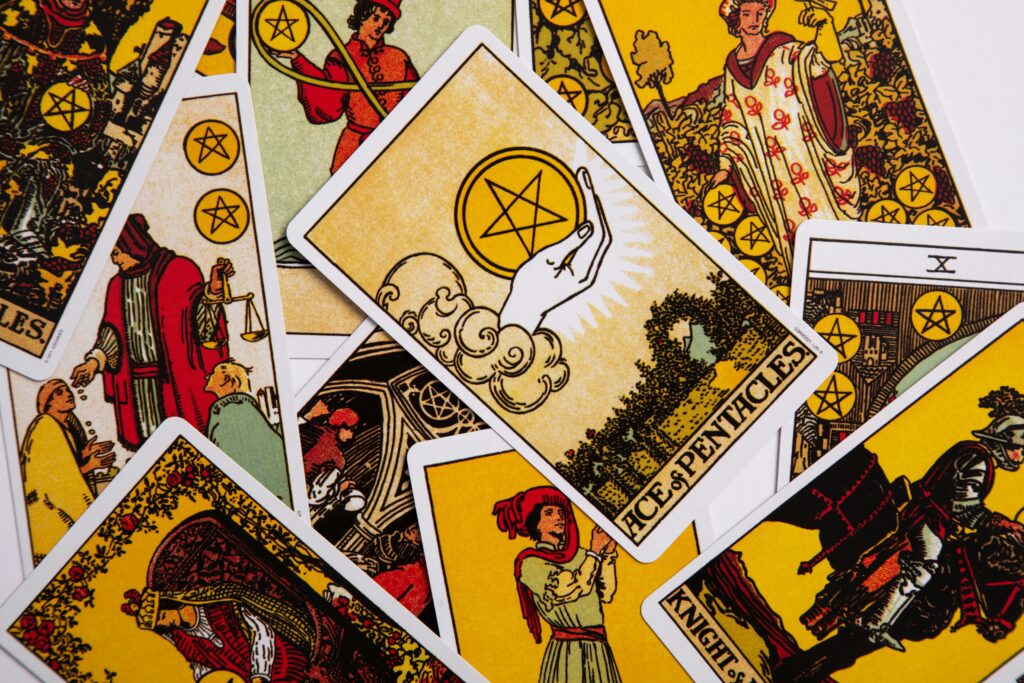
Tarot is not merely a deck of painted images. It is a living threshold. A thin membrane between the psyche and the unseen. A mirror that speaks in symbols, patterns, spirits, ancestors, shadows, and archetypes that recognise you more deeply than you have ever recognised yourself.
When you sit before the cards, whether you shuffle them with trembling hands or with the quiet mastery of a practiced reader, you are not doing something casual. You are entering the architecture of your inner world. You are stepping into a room where psyche, spirit, intuition, and shadow take shape and speak.
Tarot is psychology dressed in myth. Occult knowledge hidden in pictures. Light pagan whispers woven into the imagery of nature, seasons, fire, water, bone, breath, and fate.
It is also profoundly personal – a dialogue between you and the unseen guides, forces, and ancestral echoes that stand at the edges of your awareness, waiting to speak.
This guide will teach you how to read tarot in a way that is sensual, intelligent, intuitive, grounded, and spiritually potent. Not a mechanical method. Not a “memorise 78 definitions” task. But a return to your deepest knowing – to the breath of the soul.
I. The Real Reason Tarot Works (Psyche, Spirit, and the Invisible Architecture)
People often ask how tarot “actually” works.
Is it psychology? Is it spiritual communication? Is it the subconscious? Is it spirits? Is it archetypal patterning? Is it intuition? Is it synchronicity? Is it the soul?
The truth – and the reason tarot is so potent – is that it is all of these at once.
Tarot works because the psyche is symbolic. It speaks in imagery, colour, sensation, myth, desire, fear, memory, and inner cosmology.
The unseen world – however you understand it – also speaks in symbols. Whether you call them guides, ancestors, spirits, or archetypes, these beings do not communicate in paragraphs. They communicate in impressions, visions, intuition, atmosphere, and metaphor.
Tarot is the meeting point where your psychology and the spirit world overlap, where intuition and subconscious patterning create a bridge, where your soul steps forward and says:
“Here. This is where you are. This is what you need to see now.”
Tarot is not fortune-telling. It is truth-telling.
It reveals what is happening beneath your conscious awareness. And from those roots, it predicts the most aligned trajectory – unless you choose to change direction.
This gives tarot its accuracy, its electric immediacy, its ability to tell you the thing you were avoiding, the desire you didn’t want to say aloud, the truth you already knew but needed embodied confirmation for.
II. How to Begin a Tarot Reading (The Ritual of Arrival)
Before any cards are drawn, a reading has already begun.
You begin by entering the psychic threshold – that quiet inner space where intuition becomes louder than fear, and where the world softens enough for the deeper layers of reality to speak.
Sit somewhere private. Let the room breathe around you. Feel the weight of your body. Let your thoughts loosen. Let yourself arrive.
You are not summoning anything dangerous or chaotic. Tarot is not the invocation of random spirits. It is the clarification of your own knowing, supported by the guides and forces who already walk with you.
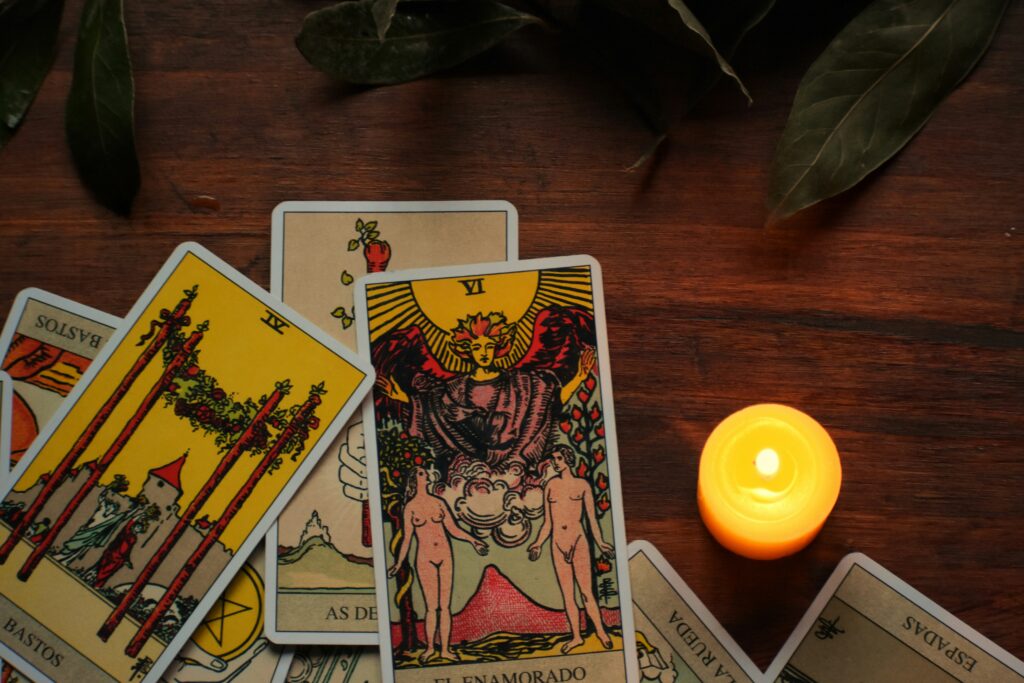
At this moment, you might light a candle. You might dim the lights. You might touch the deck lightly, almost reverently.
This is not superstition. It is sensory ritual – a way of telling your nervous system, your spirit, and your intuition:
“I am ready to listen.”
III. How to Shuffle Tarot Cards (The Psychic Reset)
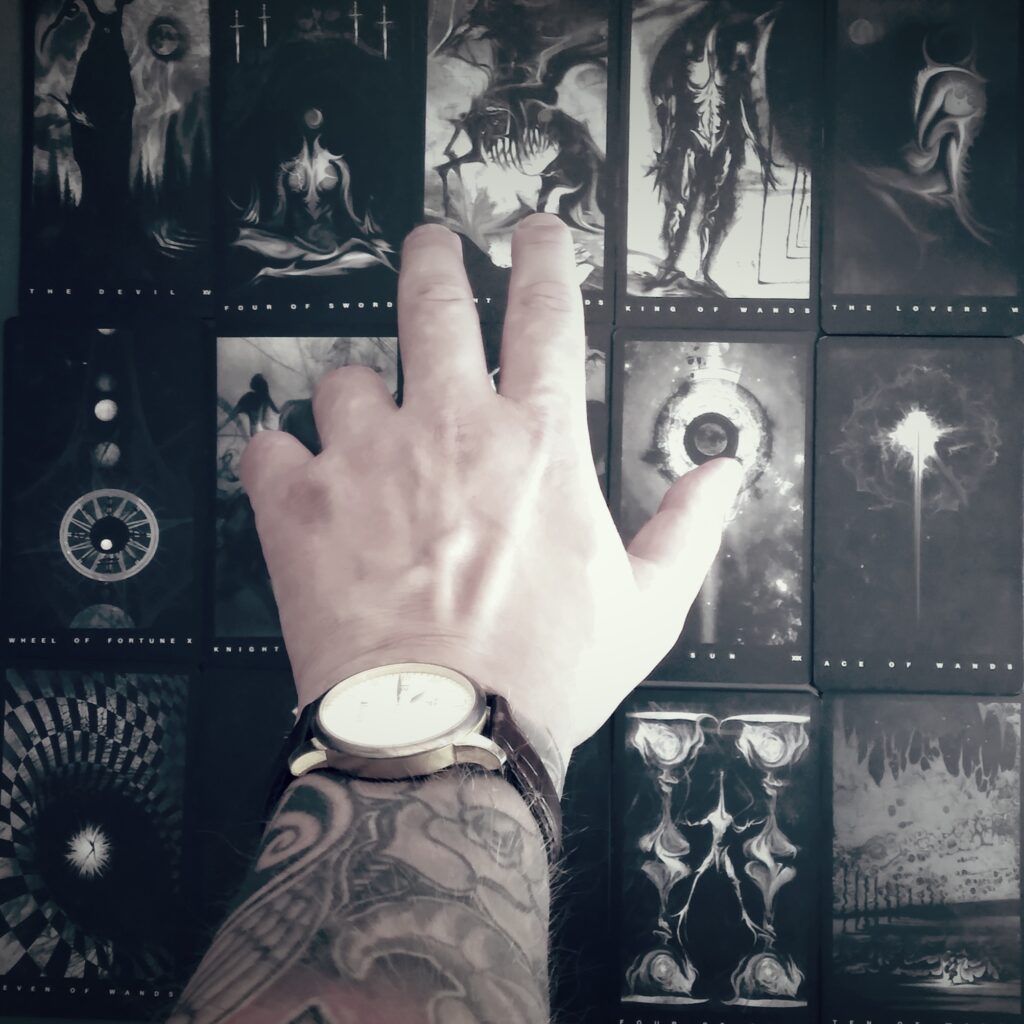
Shuffling is not simply randomising the deck. It is the process in which your energy, your question, your unconscious patterns, and your spiritual field imprint themselves into the cards.
Instead of relying on rigid technique, allow yourself to feel the deck. Shuffle slowly or quickly, lightly or firmly – whatever feels natural.
You might overhand shuffle. You might riffle shuffle. You might mix the cards on the table like water.
The method is not important. The presence is.
As you shuffle, feel your question forming. Let your energy move into the cards like heat entering water.
This is the psychic reset – the cleansing moment when the deck becomes attuned to the truth you are ready to receive.
IV. How to Choose a Spread (The Architecture of Meaning)
A spread is the skeleton of the story the cards will tell.
You can read with:
- A single card
- A three-card arc
- A horseshoe spread
- The Celtic Cross
- Or a personalised ritual spread
But no matter which you choose, always let the spread reflect the actual emotional question beneath the surface.
If you ask, “What will happen with my relationship?” but the real question is, “Does he care about me?” the cards will answer the second question even if you tried to disguise it.
Tarot always speaks to the heart first.
V. How to Read the Cards (The Method That Requires No Memorisation)
Many beginners believe tarot requires memorising 78 meanings.
This is unnecessary – and it blocks intuition.
Tarot does not want you to memorise definitions. It wants you to see.
When you look at a card, pay attention first to what it evokes emotionally and psychologically.
Notice the imagery – is it tense, soft, explosive, luminous, cold, open, restrained, victorious, wounded?
Notice the figure’s posture – are they leaning forward, stepping back, rising, dissolving, holding, offering, resisting?
Notice the colour – the reds of desire and action, the blues of intuition, the yellows of clarity, the blacks of shadow work, the whites of spirit.
The card is speaking long before you begin interpreting.
This is where psychology meets the occult. This is where the Pagan natural world enters the reading. And this is where guides and spirits whisper – in the tiny intuitive details that rise in your awareness the moment you look.
Only after this intuitive reaction should you bring in technical knowledge: the number, the suit, the element, the archetype.
This creates readings that are emotionally rich, psychologically intelligent, and spiritually accurate.
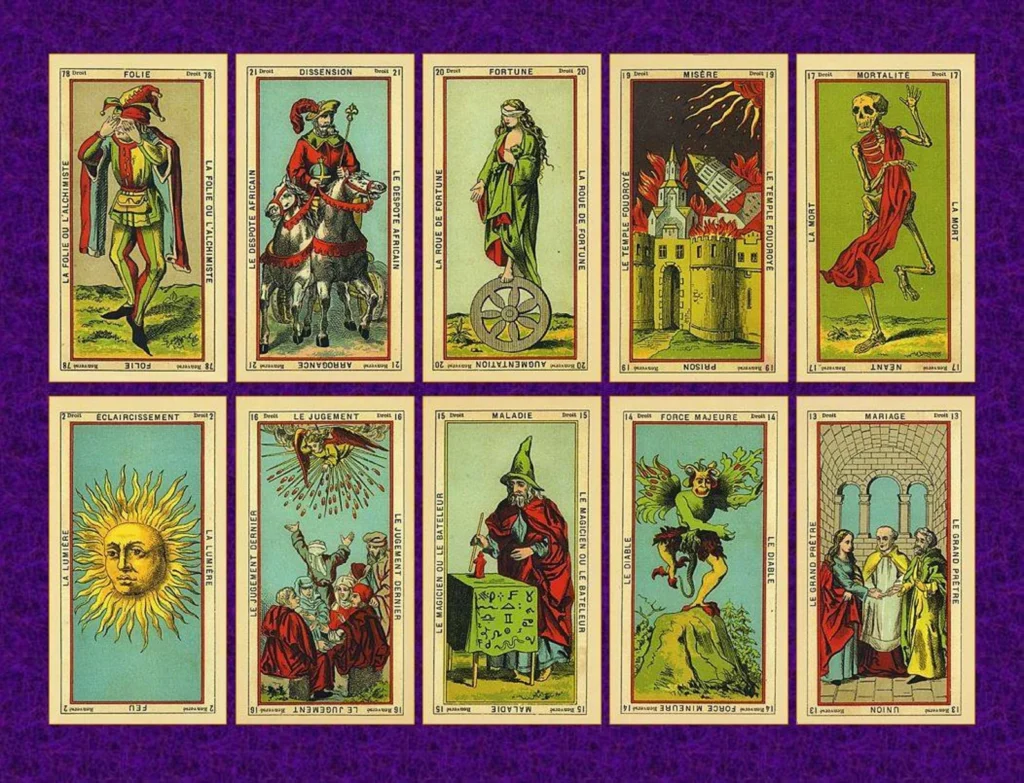
VI. The Major Arcana (Spirit, Fate, Initiation)
The Major Arcana are not merely “important cards.” They are initiations (read there meanings here).
Each one is a spiritual archetype — a guide, a teacher, or a challenge delivered not just by the psyche but by the unseen world. They represent thresholds in your life story: beginnings, endings, transformation, revelation, destruction, rebirth, awakening.
The Fool is the soul at the edge of desire.
The Magician is power becoming form.
The High Priestess is the whisper of the hidden world.
Death is the ritual of release.
The Tower is the collapse of illusion.
The Star is the breath after darkness.
The World is the completion of a cosmic cycle.
To read the Majors is to listen to the voice of the soul itself.
VII. The Minor Arcana (Your Psyche in Motion)
While the Major Arcana represent soul-level forces, the Minor Arcana represent how those forces move through everyday life.
Cups speak the language of emotion, longing, intuition, relationships, grief, and devotion.
Wands speak desire, willpower, creativity, ambition, and the primal flame.
Swords speak thought, conflict, clarity, truth, honesty, and shadow confrontations.
Pentacles speak grounding, body, money, health, safety, and the material world.
Together they map out the micro-movements of your internal life – the living terrain of your psychology.
VIII. Court Cards (People, Spirits, Selves)
Court cards are misunderstood more than any other cards in the deck. They are not just “people.”
They are:
- a person
- a personality
- an aspect of you
- a visitor in your life
- an archetype
- sometimes an ancestral or spiritual figure
When a court card appears, ask:
“Is this someone entering my life?”
“Is this a part of me waking up?”
“Is this a guide?”
“Is this an influence I must face?”
Court cards are alive — they carry spirit.
IX. How to Read a Tarot Spread (The Story, the Spirit, the Shadow)
When the cards are laid before you, imagine you are looking at a myth unfolding. Each card is a character; each position, a chapter; each detail, a hidden instruction.
Read them as a narrative:
Where is the tension?
Where is the opening?
Who holds power?
What energy is rising?
What shadow is being revealed?
What fear is unspoken?
What spirit is guiding you?
What archetype is awakening?
This is where tarot becomes powerful — not in isolated meanings, but in the interplay between the cards.
X. Shadow Work Through Tarot (The Parts of You That Don’t Yet Have a Voice)
Shadow work is the heart of deep tarot reading. Shadow is not darkness. Shadow is the truth you were not yet ready to see.
Desire disguised as fear.
Fear disguised as anger.
Grief disguised as numbness.
Power disguised as obedience.
Wisdom disguised as avoidance.
Tarot reveals the places where your psyche hides its most sacred material.
This is why readings can feel haunting, intimate, or unnervingly accurate – the cards are shining a candle into the room you tried to keep closed.
But shadow is not an enemy. It is a guide. A spirit within you that has not yet been integrated.
XI. Tarot, Spirits & Ancestral Energy (The Unseen Presences)
Not every reader works with spirits. Not every reading involves guides. But tarot often acts as a translator between you and the beings who walk just beyond sight.
Some readers feel the presence of ancestors.
Some feel animal spirits.
Some feel the presence of archetypal beings – the High Priestess archetype, the Magician, the Empress.
Some feel unnamed presences that carry wisdom like ancient water.
You do not need to force this.
If your intuition is spiritual, it will happen naturally. If your intuition is psychological, that will become your path.
Tarot meets you where you are.
And where your soul is ready to expand.
XII. How to End a Reading (Reintegration & Closure)
Ending a tarot reading is as sacred as beginning one.
You gather the cards.
You acknowledge the truth that has been revealed.
You thank the spirits or the psyche – whichever path you walk – for speaking clearly.
You let the energy settle.
This reintegration is essential. Without it, the reading stays open like an unfinished sentence.
When the reading is closed, you will feel it – a soft click inside the chest, a sense of completion.
This is how tarot becomes not just a tool, but a ritual that strengthens intuition, healing, clarity, and soul connection over time.